Apricot Nutrition facts
Apricot
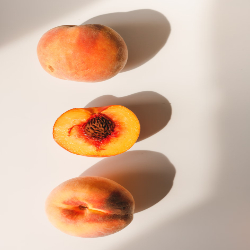
Full of fragrance and sweet, golden-orange apricots are another summer delicacies of Asian origin. These much-prized fruits were first brought to Europe by Greeks, who named them as “golden eggs of the sun.'
Botanically, the fruit is closely related to peaches and nectarine; sharing with them in the broader Rosaceae family of fruit-trees in the genus; Prunus. Scientific name: Prunus armenia.
Today, some of the main producing regions of this fruit are Turkey, Iran, Italy, France, Spain, Syria, Greece, and China.
Similar Food
-
 Acai berry 63 Cal
 -
 Acerola cherry 32 Cal
 -
 Apple 52 Cal
 -
 Avocado 160 Cal
 -
 Banana 89 Cal
Source of Calorie
48
Calories
-
Carbs11.12 g 83%
-
Protein1.40 g 10%
-
Fat0.40 g 7%
How long to burn off 48 Calories?
*Approximate base minutes for a 25-year-old, 65 kg adult at moderate intensity.
Swimming
8
min
Jogging
7
min
Cycling
7
min
Walking
12
min
| Nutrition Principle | Nutrition Value | Percentage of RDA |
|---|---|---|
| Principle | ||
| Energy | 48 Kcal | 2.5% |
| Carbohydrates | 11.12 g | 8.5% |
| Protein | 1.4 g | 2.5% |
| Total Fat | 0.4 g | 1% |
| Cholesterol | 0 mg | 0% |
| Dietary Fiber | 2 g | 5% |
| Vitamins | ||
| Folates | 9 μg | 2% |
| Niacin | 0.600 mg | 4% |
| Pantothenic acid | 0.240 mg | 5% |
| Pyridoxine | 0.054 mg | 5% |
| Riboflavin | 0.040 mg | 3% |
| Thiamin | 0.030 mg | 2.5% |
| Vitamin A | 1926 IU | 64% |
| Vitamin C | 10 mg | 16% |
| Vitamin E | 0 mg | 0% |
| Vitamin K | 3.3 µg | 3% |
| Electrolytes | ||
| Sodium | 1 mg | 0% |
| Potassium | 259 mg | 5.5% |
| Minerals | ||
| Calcium | 13 mg | 1.3% |
| Iron | 0.39 mg | 5% |
| Magnesium | 10 mg | 2.5% |
| Manganese | 0.077 mg | 3% |
| Phosphorus | 23 mg | 3% |
| Zinc | 0.2 mg | 2% |
| Phyto-nutrients | ||
| Carotene-α | 19 µg | -- |
| Carotene-ß | 1094 µg | -- |
| Crypto-xanthin-ß | 104 µg | -- |
| Lutein-zeaxanthin | 89 µg | -- |