Quince fruit Nutrition facts
Quince fruit
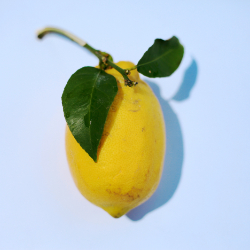
Fragrant, delicious quince fruit is a member of the Rosaceae family of pome fruits. Native to Asia Minor, this once popular delicacy has taken the backseat in the modern times of the molecular biotechnology world. Quince is rarely eaten raw but employed in cooking where just a small section of it would impart the whole recipe with a pleasant fruity aroma.
Binomially, quince is the only fruiting tree in the genus: Cydonia. Scientific name: Cydonia oblonga.
Quinces are medium-sized semi-tropical deciduous trees, reaching about 10 to 15 feet in height. Pink-white flowers appear in the spring and early summer, which develop into pear-shaped, golden color fruits. The fruit is larger than medium apple and bumpy; look somewhat like giant guava, avocado, or as short-necked pear fruit. Its fuzzy surface is smooth as in peaches.
Similar Food
-
 Acai berry 63 Cal
 -
 Acerola cherry 32 Cal
 -
 Apple 52 Cal
 -
 Apricot 48 Cal
 -
 Avocado 160 Cal
Source of Calorie
-
Carbs13.81 g 96%
-
Protein0.40 g 3%
-
Fat0.10 g 1%
How long to burn off 57 Calories?
*Approximate base minutes for a 25-year-old, 65 kg adult at moderate intensity.
| Nutrition Principle | Nutrition Value | Percentage of RDA |
|---|---|---|
| Principle | ||
| Energy | 57 Kcal | 3% |
| Carbohydrates | 13.81 g | 11% |
| Protein | 0.40 g | <1% |
| Total Fat | 0.10 g | 0.5% |
| Cholesterol | 0 mg | 0% |
| Dietary Fiber | 1.9 g | 4% |
| Vitamins | ||
| Folates | 3 µg | 1% |
| Niacin | 0.200 mg | 1% |
| Pantothenic acid | 0.081 mg | 1.5% |
| Pyridoxine | 0.040 mg | 3% |
| Riboflavin | 0.030 mg | 2% |
| Thiamin | 0.020 mg | 2% |
| Vitamin A | 40 IU | 1% |
| Vitamin C | 15 mg | 25% |
| Vitamin E | 0.12 mg | 1% |
| Vitamin K | 4.5 µg | 4% |
| Electrolytes | ||
| Sodium | 1 mg | 0% |
| Potassium | 119 mg | 2.5% |
| Minerals | ||
| Calcium | 11 mg | 1% |
| Copper | 0.130 mg | 14% |
| Iron | 0.70 mg | 9% |
| Magnesium | 8 mg | 2% |
| Phosphorus | 11 mg | 2% |
| Selenium | 0.6 µg | 1% |
| Zinc | 0.04 mg | <1% |